

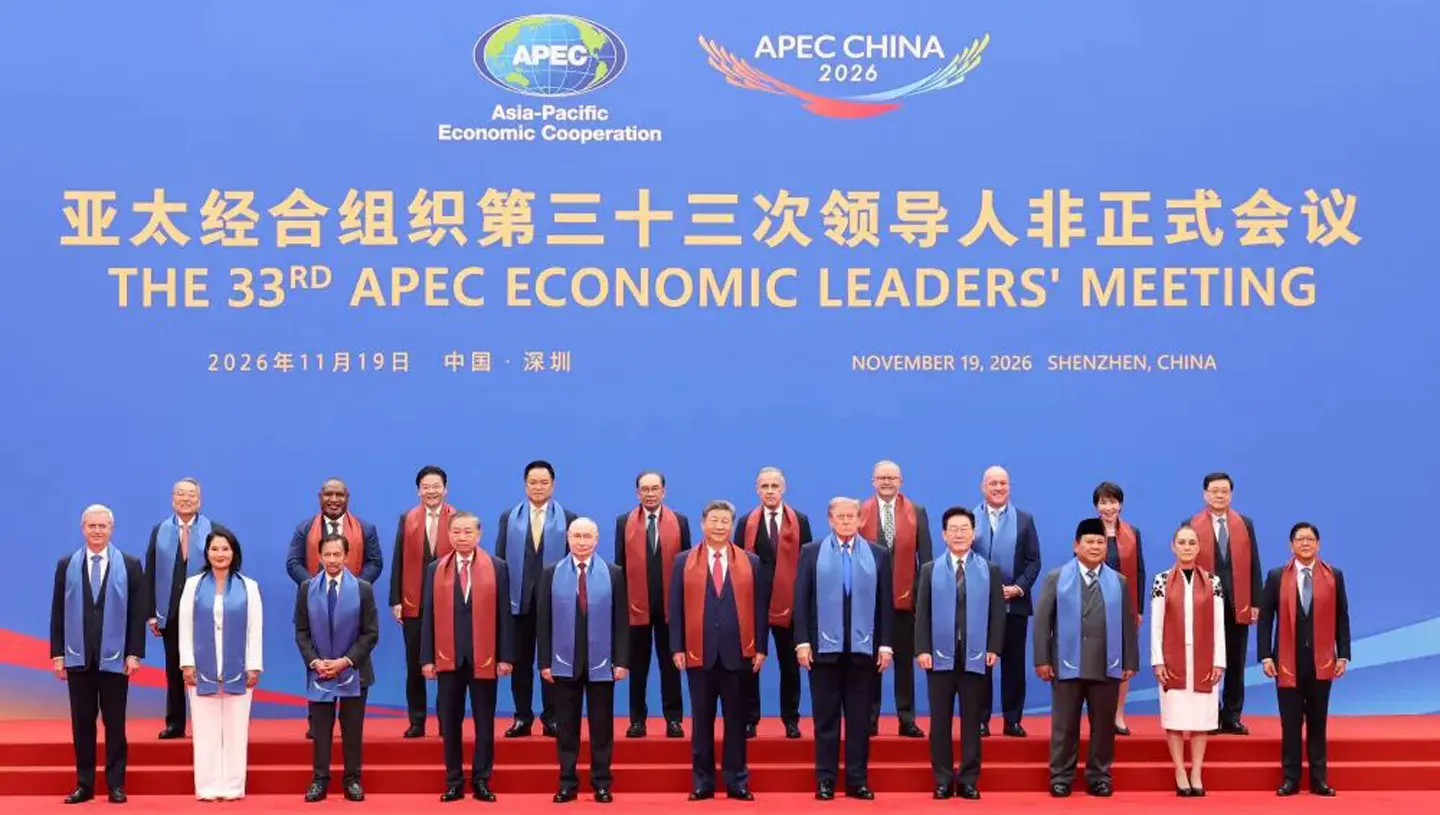
As international delegations gather in Shenzhen for the 33rd APEC Economic Leaders’ Meeting on 18–19 November 2026, the Asia-Pacific region is actively charting new pathways toward shared economic growth, energy resilience, and technological innovation. Guided by the official APEC China 2026 vision of “Building an Asia-Pacific Community to Prosper Together,” discussions among regional leaders center on three core pillars: openness, innovation, and practical cooperation.
For the clean energy and manufacturing sectors, this diplomatic milestone carries direct operational relevance. Accelerating urbanization, rapid industrial electrification, artificial intelligence data centers, and massive renewable power integration all depend upon safe, dependable, and scalable battery infrastructure. Meeting regional decarbonization targets requires more than ambitious policy goals; it demands the physical machinery, laboratory systems, and automated production lines capable of manufacturing high-quality energy storage devices at industrial scale.
Regional Decarbonization and the Need for Resilient Battery Infrastructure
The Asia-Pacific region represents the primary economic engine of the global economy, accounting for over 60% of global gross domestic product and roughly 60% of global energy consumption. Because economic expansion across member economies is deeply linked with industrial output, establishing robust battery infrastructure has transformed from an isolated technological initiative into a fundamental requirement for regional macroeconomic stability.
Shenzhen as a Gateway for Asia-Pacific Industrial Cooperation
Convening the 2026 leaders’ gathering in Shenzhen highlights the city’s unique role as an international manufacturing, digital innovation, and clean energy nexus. Beyond serving as a global trade hub, Shenzhen demonstrates the practical realization of comprehensive electrification. During the APEC summit week, primary event venues, administrative headquarters, and public transit nodes operated entirely on 100% green electricity, as documented in coverage by Xinhua News Agency.
This continuous green power supply combines offshore wind farms along the Guangdong coastline with ultra-high-voltage renewable transmission from utility-scale solar and wind installations across western China. However, delivering uninterrupted clean power across variable weather conditions highlights an essential engineering reality: renewable generation is functionally incomplete without flexible, high-capacity energy storage. Translating regional clean energy pledges into continuous industrial power requires coordinated investment in advanced battery infrastructure across production, transmission, and local grid support.
Openness and Innovation Driving Energy Storage Deployment
Regional collaboration under the Asia-Pacific Economic Cooperation (APEC) framework provides a collaborative environment for aligning technical standards, accelerating technology transfer, and lowering supply chain barriers. Developing resilient battery infrastructure is fundamentally a multilateral endeavor. While primary chemical research may originate in university laboratories, commercial viability requires international equipment sourcing, standardized factory acceptance protocols, and localized workforce training.
TOBGROUP views the APEC 2026 discussions as an important opportunity to examine the industrial foundations of modern energy systems. Rather than debating whether battery adoption will expand, engineering leaders must focus on how diverse economies can establish cost-effective, repeatable, and safe cell manufacturing capabilities tailored to their specific market requirements.
Global Electrification Trends Accelerating Grid and Mobility Demand
The worldwide transition toward what energy economists call the “Age of Electricity” is altering global load curves and capital expenditure patterns. Expanding clean generation, widespread electric vehicle deployment, and power-dense computing infrastructure are driving continuous, compounding demand for advanced battery infrastructure.
Surging Power Consumption Across Emerging Regional Economies
According to detailed projections published by the International Energy Agency (IEA) in its Electricity 2026 report, global electricity consumption is forecast to expand at an average annual pace of 3.6% through 2030. Emerging and developing economies represent nearly 80% of this additional demand growth, driven by rapid industrialization, consumer electrification, and widespread air conditioning deployment.
Concurrently, global electricity generation is undergoing rapid structural decarbonization. The IEA estimates that annual renewable power additions will exceed 1,000 TWh each year through 2030, with solar photovoltaic installations accounting for more than 600 TWh of that yearly expansion. By the end of this decade, solar, wind, and nuclear assets are projected to supply roughly half of total global electricity generation. Managing this immense influx of intermittent power makes utility-scale battery infrastructure the single most critical balancing asset for grid operators worldwide.
Expanding Utility-Scale Storage and Electric Vehicle Deployment
Empirical installation data confirms this historic acceleration. In 2025 alone, global installations of new battery energy storage systems reached 108 GW, marking a dramatic 40% expansion over 2024 levels. Approximately 80% of this newly commissioned capacity was deployed in utility-scale projects designed to support grid frequency, smooth renewable generation curves, and prevent peak-load transmission congestion.
Parallel growth in commercial and passenger mobility continues to reinforce this industrial trajectory. Global electric vehicle battery deployment surpassed 1.2 TWh in 2025, expanding by nearly 30% year-on-year and accounting for more than 70% of total worldwide battery cell consumption. As heavy commercial transport, port logistics equipment, marine vessels, and electric aviation begin to electrify, establishing decentralized, high-yield battery infrastructure has become an essential determinant of long-term trade competitiveness.
Upgrading Battery Infrastructure: From Capacity Volume to High-Standard Manufacturing
As installation volumes escalate, major manufacturing economies are shifting their strategic focus from raw gigawatt-hour capacity expansion toward comprehensive manufacturing quality, defect prevention, and system-level lifecycle management.
National Policy Frameworks Targeting Quality and System Integration
In China, regulatory and industrial policy actively aligns physical manufacturing standards with long-term grid integration. The New-Type Energy Storage Scale-Up Construction Special Action Plan (2025–2027), formulated jointly by the National Development and Reform Commission (NDRC) and the National Energy Administration (NEA), establishes a clear national deployment target exceeding 180 GW of operational new-type storage by 2027. Crucially, the directive emphasizes diversified application topologies, safety engineering, market-based dispatch mechanisms, and standardized battery infrastructure integration.
In parallel, an eight-department industrial manufacturing action plan mandates that domestic energy storage production sectors accelerate intelligent, high-end, and green manufacturing upgrades. This framework prioritizes higher electrochemical conversion efficiencies, advanced in-line inspection mechanisms, standardized environmental enclosures, and close supply-chain coordination. For manufacturers and equipment suppliers, building durable battery infrastructure means deploying automated lines that maintain sub-micron dimensional tolerances and eliminate latent cell defects before shipment.
Strategic Priorities Across the 15th Five-Year Storage Plan
Further policy reinforcement arrives through the Energy-Sector Energy Conservation and Carbon Reduction Action Plan (2026–2028) and the newly unveiled New-Type Energy Storage Implementation Plan for the 15th Five-Year Plan period (issued in November 2026). These national roadmaps call for expanding renewable consumption, advancing long-duration storage technologies, and implementing intelligent source-grid-load-storage microgrids.
These policy developments demonstrate that the next stage of global storage expansion will not be won by low-cost manual assembly. Instead, building modern battery infrastructure demands digital process control, complete lot-level traceability, automated electrode coating, and rigorous factory testing designed to ensure decades of stable operational performance under extreme thermal and mechanical stresses.
Bridging Electrochemical Formulation and Scalable Cell Production
Every commercial battery begins as an innovative chemical formulation within a research laboratory. However, laboratory synthesis alone does not guarantee commercial manufacturability. Transforming a novel cathode powder, synthetic graphite anode, or polymer electrolyte into a commercially qualified cell requires bridging the gap between benchtop chemistry and high-speed automated production.
Mitigating Operational Risks Across the Lab-to-Factory Continuum
Developing repeatable battery infrastructure requires methodical engineering across every unit operation: slurry dispersing, continuous roll-to-roll coating, heated calendering, high-precision slitting, automated winding or stacking, electrolyte injection, vacuum sealing, formation grading, and safety qualification. Any uncontrolled process variance introduced during slurry mixing or roll lamination transfers directly into electrochemical capacity loss, internal short circuits, or early cycle degradation.
To mitigate scale-up risk, research institutions and industrial enterprises require standardized equipment platforms that bridge laboratory research and commercial production. Modular research machines allow material scientists to evaluate chemical mechanisms without process noise, while intermediate pilot lines enable process engineers to establish stable parameter windows before deploying capital-intensive gigafactory lines.
Diversified Chemistries: Sodium-Ion, Solid-State, and Dry Electrodes
The diversification of global energy storage demands customized manufacturing solutions:
- Sodium-Ion Batteries: With abundant raw materials and excellent low-temperature discharge capabilities, sodium-ion systems represent a highly attractive chemistry for stationary grid storage and urban light mobility. However, handling larger sodium ions requires tailored electrode formulations, specialized electrolytes, and dedicated formation protocols.
- Solid-State Batteries: Eliminating volatile liquid electrolytes promises superior intrinsic safety and volumetric energy density. Yet, solid-state cell fabrication imposes stringent controls on dry-room atmospheric moisture (dew points below -60 °C), uniform interface pressure, and specialized isostatic lamination.
- Dry Battery Electrodes: Solvent-free electrode fabrication eliminates massive 100-meter drying ovens and toxic NMP solvents, cutting factory footprints by over 60% and reducing equipment capital expenditures by up to 40%. Deploying dry electrode systems requires ultra-precise high-shear fibrillation and heated roller presses capable of producing continuous, free-standing electrode films.
- Tabless Cylindrical Architectures: Large cylindrical formats (including 4680, 4690, and 32140 designs) require specialized laser cutting, continuous roll-edge flattening, and high-speed collector welding to ensure uniform current distribution under fast-charging loads.
Providing the mechanical systems to support these diverse technologies is foundational to modern battery infrastructure.
Engineering Robust Battery Infrastructure Across the Complete Manufacturing Spectrum
As an established global technology provider, TOBGROUP delivers comprehensive battery materials, specialized laboratory machinery, pilot validation systems, and turnkey manufacturing solutions for universities, technology developers, and commercial cell producers worldwide.
Turnkey Cell Assembly and Automated Production Lines
For industrial manufacturers deploying commercial cells, our turnkey battery production line solutions provide the end-to-end battery infrastructure required to scale cell manufacturing. Beginning with automated planetary vacuum slurry mixing, systems transition seamlessly through high-precision slot-die coating, precision calendering, electrode slitting, automated cell assembly, vacuum electrolyte filling, formation grading, and finished cell sorting.
Our production equipment accommodates coin, pouch, cylindrical, and prismatic cell architectures across lithium-ion, sodium-ion, and supercapacitor platforms. Lines are custom-engineered to meet specific capacity targets, cleanroom constraints, and local electrical codes, providing customers with turnkey reliability and rapid ramp-to-yield timelines.
Pilot Verification Lines for Rapid Technology Industrialization
Moving directly from small laboratory button cells to full-scale automated lines introduces immense technical risk. To de-risk this transition, TOBGROUP engineers specialized pilot verification lines that operate as scalable manufacturing testbeds.
At our dedicated advanced battery R&D center, we assist clients in validating process windows, formulating slurry rheology, and evaluating cycle stability on dedicated pilot battery infrastructure. By optimizing manufacturing parameters on pilot systems, developers identify potential electrode brittleness, edge burrs, or electrolyte wetting delays long before capital commitments for gigafactory equipment are finalized.
Full-Lifecycle Technical Consultation and Commissioning Support
Supplying high-performance equipment represents only one component of a successful battery manufacturing initiative. TOBGROUP integrates engineering consultation, facility layout planning, utility specification, factory acceptance testing (FAT), international shipping logistics, on-site mechanical installation, site acceptance testing (SAT), operator training, and ongoing technical service.
This full-lifecycle approach ensures that regional partners avoid fragmented equipment procurement that leads to interface bottlenecks, mismatched throughput, and costly project delays.
Strategic Imperatives for Emerging Asia-Pacific Clean Energy Projects
The expansion of clean energy across the Asia-Pacific offers extraordinary economic potential, but achieving durable manufacturing autonomy requires addressing key operational imperatives:
Standardizing Experimental Data for Seamless Process Transfer
A common failure mode in battery commercialization occurs when academic laboratories record formulation data without capturing process parameters. Temperature profiles, mixing shear rates, coating gap tolerances, and calendering tensions must be systematically documented to enable successful pilot replication. Building scalable battery infrastructure requires treating laboratory findings as transferable engineering datasets rather than isolated chemical observations.
Deploying Flexible Line Architectures for Evolving Cell Designs
The battery industry is evolving across multiple chemical pathways, from LFP and sodium-ion to high-nickel ternary, silicon-carbon anodes, and all-solid-state architectures. To prevent premature equipment obsolescence, industrial developers must prioritize modular line architectures when building long-term battery infrastructure. Implementing standardized mechanical stations and adaptable tooling enables manufacturers to upgrade cell formats or adjust chemistries with minimal downtime.
Developing Localized Workforce Competence and Maintenance Ecosystems
Modern manufacturing facilities require skilled technicians capable of maintaining mechanical tolerances, calibrating servo drives, diagnosing automated sensor networks, and maintaining dry-room atmospheric integrity. True regional cooperation must extend beyond machinery delivery to encompass structured knowledge transfer, comprehensive technical documentation, and rapid spare-parts availability. Cultivating local technical competence ensures that newly commissioned battery infrastructure delivers sustained operational uptime and high yield.
Frequently Asked Questions About Battery Infrastructure in the Asia-Pacific
How do APEC 2026 priorities intersect with battery manufacturing infrastructure?
The APEC 2026 themes—openness, innovation, and cooperation—directly align with the engineering imperatives of the clean energy transition. Open regional markets facilitate technology transfer and supply chain resilience; continuous manufacturing innovation enables higher cell energy density and safety; and practical international cooperation allows emerging economies to establish localized battery infrastructure and technical capabilities.
What role do pilot lines play in commercializing new cell architectures?
Pilot lines serve as critical de-risking platforms between benchtop laboratory research and commercial battery infrastructure. They allow engineering teams to validate machine interactions, define statistical process windows, test electrode lamination tolerances, and establish baseline yield metrics without the immense capital exposure of full-scale production facilities.
Which electrochemical platforms can be developed with TOBGROUP line solutions?
TOBGROUP provides comprehensive materials, laboratory equipment, and complete production line solutions for lithium-ion (LFP, NCM, LCO), sodium-ion, solid-state, dry-electrode, lithium-sulfur, and supercapacitor technologies across coin, pouch, cylindrical (including 18650, 21700, 32140, 4680), and prismatic formats.
How does TOBGROUP ensure project delivery across diverse international economies?
TOBGROUP provides end-to-end engineering support spanning early-stage process consultation, equipment customization, factory acceptance testing, secure international logistics, on-site commissioning, operator training, and responsive technical support. Our modular equipment designs adhere to international electrical and safety standards, ensuring reliable integration into global industrial environments.
Advancing Sustainable Industrial Growth with TOBGROUP
Transforming regional clean energy ambitions into dependable industrial reality requires building resilient, high-yield battery infrastructure backed by proven engineering execution. With more than 8,000 customers in over 100 countries and regions, TOBGROUP has successfully delivered equipment and turnkey systems for more than 200 battery manufacturing and research initiatives worldwide.
Founded in 2012 by battery technology pioneers active in the industry since 2002, TOBGROUP combines federal trademark registration (USPTO Reg. No. 8,350,946) with an extensive honors, certificates, and patent portfolio covering core cell assembly, precision electrode fabrication, and testing automation. We remain dedicated to providing the reliable machinery, engineering expertise, and project delivery required to build the global battery infrastructure of tomorrow.
Whether your organization is establishing an advanced university research center, deploying a pilot verification line for emerging battery chemistries, or constructing a commercial manufacturing facility, our technical teams stand ready to collaborate. For detailed machine specifications, facility planning consultations, or turnkey project proposals, reach out through our technical support and engineering consultation channels.


