

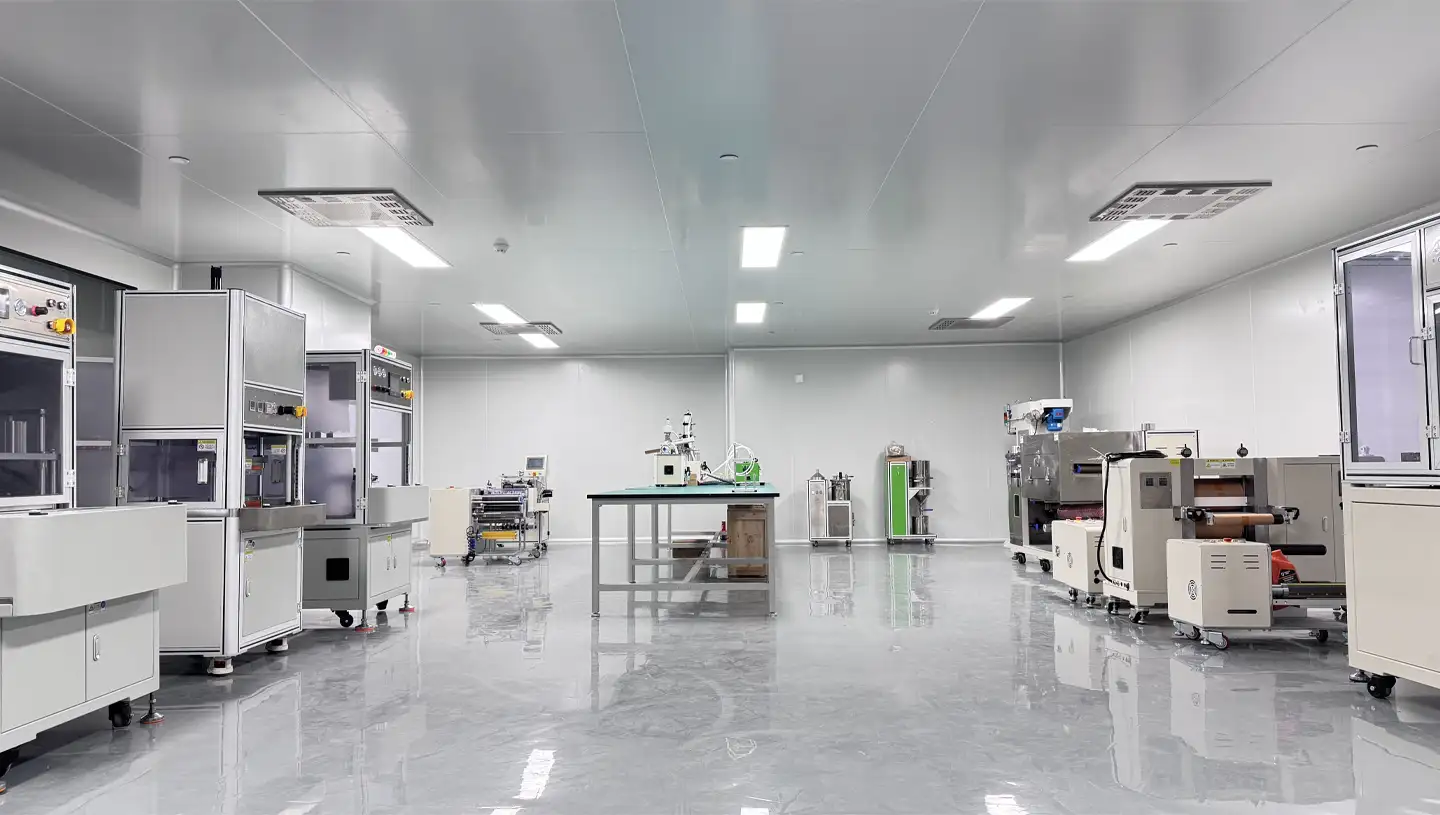
TOBGROUP is honored to announce that the research laboratory directed by Professor Sir M. Stanley Whittingham at Binghamton University, State University of New York, recently selected and procured a suite of TOB battery laboratory equipment.
Professor Whittingham was awarded the 2019 Nobel Prize in Chemistry alongside John B. Goodenough and Akira Yoshino for the foundational development of lithium-ion batteries. His pioneering discovery of reversible lithium intercalation in layered materials established the electro-physical principles that power modern consumer electronics, electric vehicles, and grid-scale energy storage worldwide.
In strict observance of client confidentiality and non-disclosure standards, TOBGROUP does not disclose specific equipment model designations, mechanical configurations, order volumes, research objectives, or delivery logistics. This announcement confirms an equipment procurement relationship and does not reveal unpublished academic investigations, nor does it imply endorsement of TOBGROUP by Professor Whittingham or Binghamton University.
Supplying Battery Laboratory Equipment to a Pioneer of Energy Storage
For battery equipment manufacturers, providing battery laboratory equipment to an internationally recognized research institution represents both an engineering milestone and an ongoing technical responsibility. Academic laboratories operating at the frontier of energy science require instrumentation that guarantees experimental fidelity, physical stability, and repeatable process parameters.
Academic Legacy: From Lithium Intercalation to the 2019 Nobel Prize
Professor Sir M. Stanley Whittingham serves as a Distinguished Professor of Chemistry and Materials Science at Binghamton University. In the 1970s, his pioneering research demonstrated that lithium ions could be reversibly inserted and extracted between the atomic layers of titanium disulfide cathodes without collapsing the host lattice.
This mechanism of reversible intercalation served as the primary scientific breakthrough that enabled practical rechargeable lithium batteries. Today, the Whittingham research group continues to investigate high-capacity layered oxides, solid-state electrolytes, multivalent systems, and advanced pouch-cell scale-up architectures. Providing dependable battery laboratory equipment to support advanced exploratory environments requires machinery that maintains tight tolerances across evolving chemical systems.
Strict Customer Confidentiality and Non-Endorsement Commitment
Procurement of specialized battery laboratory equipment frequently involves proprietary experimental workflows, novel binder formulations, and emerging cell form factors. Disclosing specific machine specifications or customized tooling could inadvertently compromise active research programs before formal peer-reviewed publication.
TOBGROUP maintains strict operational protocols regarding customer data privacy. We treat all equipment selections, technical modifications, and project timelines as confidential. Furthermore, TOBGROUP does not attribute third-party scientific discoveries, experimental outcomes, or academic publications to our equipment supply. Respecting research boundaries is a core tenet of our professional manufacturing service.
The Technical Demands of Advanced University Battery Research
Academic battery research has evolved far beyond manual beaker chemistry. Modern experimental protocols require continuous, traceable process control to distinguish true material performance from manufacturing variability.
Bridging Fundamental Electrochemistry and Mechanical Repeatability
When evaluating experimental active materials—such as single-crystal nickel-rich cathodes, silicon-carbon composites, or solid electrolytes—researchers must ensure that cell failures stem from fundamental chemistry rather than uneven coating thickness or inconsistent assembly pressure. If electrode porosity fluctuates or lamination pressure varies between batches, experimental data becomes unrepeatable.
High-precision battery laboratory equipment minimizes mechanical noise. By automating critical fabrication steps, researchers can isolate electrochemical variables with high statistical confidence. Stable environmental regulation, uniform slurry rheology, and precise electrode calendering ensure that benchtop findings translate reliably into larger prototypes.
Protecting Research Integrity Through Strict Information Governance
In cutting-edge energy storage programs, scientific novelty is closely linked to experimental timing. Premature disclosure of laboratory equipment types, cell formats, or production capacities can compromise intellectual property filings and competitive grant initiatives.
A dependable equipment partner must operate with institutional restraint. Our technical teams conduct thorough engineering consultations during pre-sales customization while ensuring that all client-specific data remains quarantined. This rigorous governance ensures that universities and corporate R&D divisions can scale experimental capabilities without risking external information leakage.
Systematic Workflows in Modern Battery Laboratory Equipment
Translating active material formulations into functional electrochemical test cells follows a structured, interconnected manufacturing sequence. TOBGROUP designs modular battery laboratory equipment that mirrors industrial production logic while retaining benchtop flexibility:
Stage 1: Active Powder Synthesis and High-Precision Slurry Mixing
The electrode manufacturing process begins with dry powder handling and liquid slurry dispersion. Active materials, conductive carbon black, and polymeric binders must be dispersed into uniform suspensions without agglomeration or polymer chain degradation.
Our planetary vacuum mixers and high-shear dispersing systems incorporate multi-stage vacuum deaeration and integrated water-cooling jackets. These systems eliminate micro-bubbles and thermal buildup, producing homogenous cathode and anode slurries optimized for thin-film coating.
Stage 2: Uniform Electrode Coating and Precision Calendering
Once mixed, the slurry is deposited onto copper or aluminum current collectors. Achieving uniform mass loading requires continuous thickness control and stable thermal drying.
Our laboratory slot-die and doctor-blade coating machines feature micro-meter adjustable doctor blades, heating zones, and optional vacuum chucks. Following drying, electrodes pass through heated roller presses equipped with chrome-plated alloy rolls. With roll surface cylindricity calibrated to sub-micron tolerances, our battery laboratory equipment for calendering ensures consistent electrode density and uniform porosity without foil wrinkling.
Stage 3: Controlled-Atmosphere Assembly Across Coin, Pouch, and Cylindrical Formats
Electrode sheets are precision-punched into coin-cell discs or stacked/wound for pouch and cylindrical formats. Because lithium metals and advanced electrolytes react rapidly with ambient moisture, assembly must take place inside inert environments.
TOBGROUP integrates battery laboratory equipment directly within high-purity glovebox systems and specialized dry rooms, maintaining dew points below -60 °C. From automated electrolyte filling to vacuum pre-sealing and hydraulic crimping, our equipment guarantees hermetic seal integrity and exact volumetric electrolyte dosing.
Stage 4: High-Throughput Formation and Electrochemical Diagnostic Testing
The final experimental stage involves cell formation, degassing, and comprehensive electrochemical cycling. Multi-channel battery cyclers apply programmed charge-discharge profiles to evaluate specific capacity, C-rate capability, cycle life, and impedance characteristics.
Data acquisition systems monitor voltage profiles and cell internal resistance, providing researchers with the empirical data needed to validate cell performance. Seamless data traceability across all manufacturing stages allows research teams to correlate electrode preparation parameters directly with finished cell cycle stability.
Engineering Continuity: Translating Benchtop Discoveries into Scaled Production
While coin cells remain standard for early material screening, commercial validation demands scalable cell architectures. Moving from small-scale laboratory trials to pilot manufacturing introduces complex fluid dynamics, heat dissipation challenges, and mechanical alignment requirements.
TOBGROUP develops modular battery laboratory equipment designed with production-scale continuity in mind, enabling research institutions and battery startups to scale their chemistries into pilot and gigawatt-hour production lines:
Co-Engineering Cell Architecture and Automated Production Equipment
A promising material formulation cannot achieve commercial adoption unless it can be manufactured reliably at high throughput. Tooling design, web tension control, and thermal dissipation must be engineered alongside the electrochemical cell architecture.
At our dedicated advanced battery R&D center, TOBGROUP engineers work alongside research partners to evaluate pilot manufacturability using scalable battery laboratory equipment. We identify potential production bottlenecks—such as electrode brittleness, slow electrolyte wetting, or complex tab welding—long before fixed tooling is deployed.
Tabless Cylindrical Cell Line Integration (32140, 4680, and 4690 Formats)
The international battery industry is rapidly adopting large cylindrical form factors, including 32140, 4680, and 4690 designs. These cells utilize tabless current-collector structures to minimize internal resistance and improve thermal distribution under fast-charging conditions.
Manufacturing tabless cells requires synchronized automation across continuous roll winding, laser cutting, edge forming, and high-speed collector welding. TOBGROUP engineers complete turnkey battery production line solutions that connect front-end electrode preparation with automated cell assembly, providing the mechanical rigidity and optical inspection required for large cylindrical cells.
Specialized High-Rate Battery Manufacturing for Drone and Aerial Applications
Unmanned aerial vehicles (UAVs) and electric vertical takeoff and landing (eVTOL) aircraft require battery cells that deliver exceptional power-to-weight ratios and sustained high C-rates. These operating conditions generate intense thermal loads that expose any flaw in electrode uniformity or internal current collection.
TOBGROUP supplies specialized pouch and cylindrical manufacturing equipment optimized for high-rate cell fabrication. By tightly controlling electrode burr heights, ultrasonic weld integrity, and internal resistance consistency, our manufacturing systems help developers build reliable power packs for demanding aerospace and robotic applications.
Frequently Asked Questions About Battery Laboratory Equipment and Scale-Up
Why is process repeatability critical when selecting battery laboratory equipment?
In academic and industrial battery research, small process fluctuations—such as micro-scale variations in electrode thickness, calendering pressure, or electrolyte volume—can distort electrochemical measurements. High-precision battery laboratory equipment eliminates mechanical variability, ensuring that performance differences reflect true material characteristics rather than experimental errors.
How does TOBGROUP safeguard proprietary academic research during equipment procurement?
TOBGROUP enforces strict information governance protocols. We do not disclose client equipment models, configurations, order details, or experimental goals without explicit customer authorization. Furthermore, we never attribute external scientific discoveries or peer-reviewed publications to our equipment supply, maintaining clear boundaries between commercial manufacturing and independent academic research.
What cell formats can be fabricated with modular battery laboratory equipment?
Modern battery laboratory equipment from TOBGROUP supports all major electrochemical cell architectures, including CR2032 coin cells, multi-layer pouch cells, and cylindrical cells (such as 18650, 21700, and 4680 formats). Our modular machinery allows research facilities to adapt tooling as experimental programs expand from initial material screening to pilot-scale pouch cell validation.
Supporting Global Scientific Progress with TOBGROUP
Serving leading research universities, national laboratories, and commercial cell developers requires a sustained commitment to technical excellence and manufacturing reliability. With more than 8,000 customers in over 100 countries and regions, TOBGROUP has delivered machinery for more than 200 turnkey battery manufacturing and pilot-line projects worldwide.
Founded in 2012 by battery technology pioneers active in the industry since 2002, TOBGROUP integrates federal trademark registration (USPTO Reg. No. 8,350,946) with an extensive honors, certificates, and patent portfolio covering electrode preparation, cell assembly, and testing automation. We remain dedicated to providing durable, high-precision equipment that helps global innovators turn novel electrochemical ideas into viable clean energy technologies.
Whether your institution is outfitting a new university research facility, establishing a solid-state battery dry room, or scaling up pilot manufacturing, our engineering specialists are ready to assist with high-performance battery laboratory equipment. For technical specifications, custom equipment configurations, or facility design consultations, reach out through our technical support and engineering consultation channels.


