

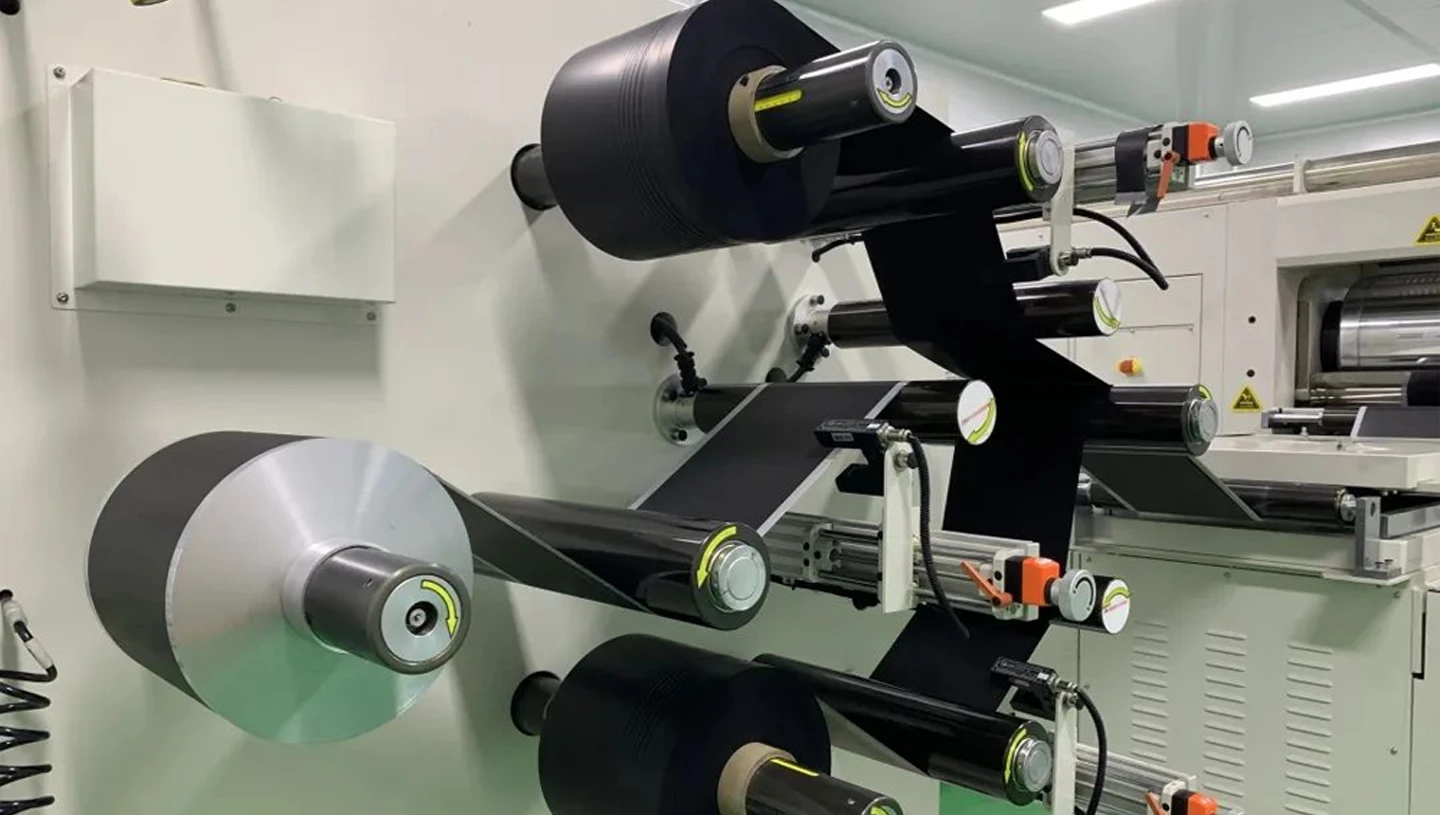
Dry battery electrode technology is fundamentally transforming the economics of lithium-ion and solid-state cell production. For over three decades, battery manufacturers have relied on wet slurry casting, a process that requires dissolving active powders and polymer binders in organic solvents, spreading the suspension across metal foils, and driving off the liquid in massive industrial drying ovens.
Today, escalating energy costs, stringent carbon footprint legislation, and the commercial push toward next-generation battery chemistries have pushed wet coating to its practical limits. Industrial initiatives backed by international consortia and organizations like the U.S. Department of Energy underscore that solvent-free processing is essential for sustainable cell manufacturing. By eliminating volatile liquids entirely, dry battery electrode production removes costly evaporation tunnels, reduces capital expenditure, and provides the enabling foundation for solvent-sensitive solid-state batteries.
The Shift to Dry Battery Electrode Manufacturing
Understanding why dry battery electrode methods are gaining global momentum requires looking closely at the structural inefficiencies inherent to traditional wet slurry lines. In standard electrode preparation, cathode materials must be suspended in volatile organic compounds like N-Methyl-2-pyrrolidone (NMP), while anode slurries require extensive water-based mixing.
Thermodynamic and Economic Ceilings of Wet Slurry Coating
Once wet slurry is deposited onto copper or aluminum current collectors, the carrier liquid must be completely extracted. This requires continuous drying ovens that often extend between 60 and 100 meters across the plant floor.
Heating and circulating air through these immense drying zones, coupled with the condensation and distillation infrastructure required to recover toxic NMP, accounts for 40% to 50% of the total energy consumed in a conventional cell gigafactory. This massive thermal demand represents an enormous operational expense that scales linearly with plant capacity.
Eliminating Toxic NMP Solvents and Massive Drying Tunnels
Beyond thermal inefficiencies, NMP is categorized as a hazardous reproductive toxin subject to strict environmental oversight, including European Union REACH directives. Constructing, maintaining, and certifying closed-loop solvent recovery systems imposes continuous compliance overhead on facility operators.
Furthermore, liquid evaporation imposes physical limits on electrode thickness. As solvent evaporates from the film surface, capillary forces draw lightweight polymer binder particles upward. This binder migration creates an adhesive deficit at the foil interface, leading to delamination and structural cracking whenever engineers attempt to coat heavy, high-energy-density layers. Eliminating solvents removes this drying gradient entirely, allowing uniform binder distribution across the full thickness of a dry battery electrode.
Why Solid-State Batteries Depend on Solvent-Free Processing
While dry processing offers immediate cost and environmental advantages for conventional lithium-ion batteries, it is virtually mandatory for all-solid-state battery (ASSB) architectures. Next-generation solid-state formulations cannot tolerate exposure to standard manufacturing liquids.
Preventing Electrolyte Degradation and Toxic Gas Release
Advanced solid electrolytes, particularly sulfide- and halide-based compounds, exhibit severe chemical instability when placed in contact with polar organic solvents or trace moisture. Exposure to conventional liquid slurry environments causes sulfide electrolytes to rapidly decompose, destroying their crystalline structure and generating toxic hydrogen sulfide gas.
Even when non-polar solvents are utilized, their high boiling points make complete solvent extraction nearly impossible. Residual liquid molecules trapped inside the compacted composite matrix trigger parasitic side reactions during cell cycling, drastically reducing capacity retention and electrochemical stability.
Maximizing Particle Contact for High Ionic Conductivity
Solid-state cells depend entirely on direct physical contact between active cathode grains and solid electrolyte particles to facilitate ion transport. Unlike liquid electrolytes that permeate micro-scale voids, solid conductors cannot fill gaps left behind by evaporated solvents.
Dry battery electrode fabrication blends dry active powders directly with solid electrolytes and fibrillatable polymer matrices, compressing them into dense, solvent-free sheets. Integrated within modern turnkey battery production line solutions, this dry methodology produces composite electrode membranes perfectly conditioned for high-pressure isostatic lamination.
The Four-Stage Dry Battery Electrode Fabrication Sequence
Transitioning to solvent-free manufacturing replaces fluid hydrodynamics with precision powder metallurgy and mechanical fibrillation. Drawing upon extensive pilot-scale engineering, TOBGROUP has established an industrial four-stage methodology for converting raw dry active compounds into robust, free-standing electrode coils.
Stage 1: Intensive Shear Fibrillation of PTFE Binders
The fabrication sequence begins by dry-dosing active materials, conductive carbon blacks, and fibrillatable binders—primarily polytetrafluoroethylene (PTFE)—into an intensive dry mixer without liquid carriers. Controlled high-shear mechanical agitation untangles the microscopic PTFE polymer granules.
Under precise kinetic friction and thermal management, the PTFE expands into an ultra-fine, web-like micro-fibril network. This fibrillar web physically entraps the active material particles, creating a cohesive, free-flowing dry powder compound without occluding electrochemical reaction sites.
Stage 2: Roll-to-Roll Formation of Continuous Self-Supporting Films
The pre-fibrillated dry compound is transferred directly to high-stiffness heated calender rollers. Under continuous servo-driven line loading and uniform surface temperatures, the PTFE micro-fibrils undergo plastic deformation.
This mechanical compression consolidates the loose powder into a continuous, flexible, and free-standing dry battery electrode film. Unlike brittle, dried slurry coatings, this solvent-free sheet exhibits high tensile flexibility and self-supporting structural integrity, allowing it to be handled reliably on continuous roll-to-roll machinery.
Stage 3: High-Precision Calendering for Dense Particle Packing
To meet target areal capacities and electrochemical specifications, the free-standing dry membrane passes through multi-stage precision calendering rollers. Because the film is entirely free of evaporated solvent pores, calendering achieves exceptional particle packing density and uniform thickness down to micron tolerances.
This dense particle matrix shortens electron and ion conduction pathways, directly lowering cell internal resistance. The process also allows engineers to tune electrode porosity precisely without risking structural collapse.
Stage 4: Synchronized Thermal Lamination to Metal Foil Collectors
In the concluding stage, current collector foils—aluminum for cathodes or copper for anodes—receive an ultra-thin conductive carbon primer. The free-standing dry electrode film and the primed foil are simultaneously fed through heated lamination rolls.
Thermal compression activates the conductive primer, creating a permanent mechanical and electrical bond between the dry film and current collector. The finished dry battery electrode coil is automatically wound, ready for precision slitting, laser cutting, and cell assembly.
Specialized Machinery Supporting Industrial Dry Electrode Lines
Executing solvent-free electrode processing at commercial yields requires extreme mechanical rigidity and thermal precision. Because dry powder lacks the self-leveling behavior of liquid slurries, any microscopic runout across roller surfaces directly impacts film thickness uniformity.
TOBGROUP engineers purpose-built equipment designed to meet the rigorous physical tolerances of dry battery electrode processing, developed through continuous innovation at our dedicated advanced battery R&D center:
Supersonic Jet Milling for Uniform Powder Deagglomeration
Uniform powder conditioning is critical before fibrillation begins. Our specialized laboratory and pilot jet mills (TOB-MQ series) employ compressed gas or dry air to accelerate active material particles through supersonic spiral airflows. Tangential collisions deagglomerate cohesive powder clusters without mechanical grinding media, preserving particle morphology and ensuring uniform distribution of binders.
Precision Calendering with Sub-Two-Micron Roll Cylindricity
Continuous dry film forming requires calender rollers that resist deflection under immense linear pressures. Our servo-driven heated roller calenders (TOB-HRPE200-3AL series) feature high-hardness alloy rollers (HRC62) with surface cylindricity calibrated to within ±2 µm. Operating at controlled temperatures up to 150 °C with continuous gap adjustment, these machines deliver the mechanical stability necessary to form crack-free dry battery electrode membranes.
Ultra-Dry Atmosphere Integration for Sensitive Chemistries
For air-sensitive chemistries, including sulfide-based solid-state systems, processing machinery must operate inside tightly controlled environments. Our dry electrode platforms integrate seamlessly with custom multi-station glovebox lines, maintaining working dew points below -60 °C to prevent moisture contamination during powder handling and film rolling.
Gigafactory Economics: Footprint, Energy, and Carbon Reduction
Adopting dry battery electrode manufacturing delivers substantial economic and environmental advantages that fundamentally alter battery plant economics, aligning with global sustainability benchmarks and life-cycle carbon accounting.
Slashing Equipment CAPEX and Industrial Facility Footprint
Transitioning to a dry battery electrode fabrication line removes 100-meter drying tunnels, NMP recovery condensers, distillation towers, and explosion-proof ventilation infrastructure, reducing front-end equipment capital expenditure by up to 40%. Concurrently, removing drying ovens reduces the factory floor space dedicated to electrode coating by over 60%, drastically cutting building construction costs and cleanroom footprint.
Operational Energy Savings and Life-Cycle Carbon Compliance
Bypassing continuous air heating and solvent condensation lowers the operating energy consumption of the electrode production line by 25% to 45%. This substantial reduction in electrical consumption directly reduces the embedded carbon footprint (kg CO2 eq/kWh) of finished cells, assisting manufacturers in meeting international environmental mandates such as the European Union Battery Regulation.
Unlocking Ultra-Thick Electrodes for Higher Volumetric Energy
Because dry processing eliminates capillary-driven binder migration, manufacturers can produce ultra-thick electrodes exceeding 100 mg/cm² areal mass loading without cracking or delamination. Fabricating cells with thicker active layers reduces the proportion of inactive current collector foils and separator materials, boosting volumetric energy density while lowering pack-level manufacturing costs.
Frequently Asked Questions About Dry Battery Electrode Technology
What makes a dry battery electrode fundamentally different from wet-coated electrodes?
A dry battery electrode is produced entirely without liquid solvents like NMP or water. Active materials and fibrillatable polymer binders are dry-mixed, fibrillated, and calendered into free-standing films before being laminated onto collector foils, completely bypassing liquid slurry preparation and thermal drying ovens.
Which binder materials are required for solvent-free dry electrode processing?
The primary binder used in dry battery electrode manufacturing is polytetrafluoroethylene (PTFE). Unlike conventional PVDF binders that dissolve in solvents, PTFE expands into microscopic web-like fibrils when subjected to high-shear mechanical mixing, mechanically locking active particles into a flexible dry film.
How does dry processing enable thicker electrodes without delamination?
In wet coating, solvent evaporation pulls dissolved binder upward to the surface, weakening adhesion at the foil interface. Dry battery electrode processing eliminates solvent gradients entirely, maintaining uniform binder distribution across the entire electrode depth and preventing delamination even at ultra-high mass loadings.
Engineering Turnkey Dry Electrode Solutions with TOBGROUP
With more than 8,000 customers in over 100 countries and regions, TOBGROUP has delivered machinery for more than 200 battery manufacturing projects worldwide. Founded in 2012 by technical leaders active in battery engineering since 2002, our organization combines federal trademark protection (USPTO Reg. No. 8,350,946) with an extensive honors, certificates, and patent portfolio covering core cell assembly and electrode processing machinery.
Our complete equipment portfolio supports every phase of dry battery electrode implementation, from small-scale formulation in research laboratories to continuous pilot-scale production lines. By combining proprietary powder milling, heated calendering presses, and inert-atmosphere glovebox systems, TOBGROUP enables cell developers to accelerate the industrialization of solvent-free manufacturing.
Whether your team is validating novel solid-state formulations in a laboratory dry room or engineering commercial pilot lines for high-throughput cell fabrication, our engineering staff provides end-to-end support. For equipment specifications, pilot trials, or facility design consultations, contact our specialists through our technical support and engineering consultation channels.


