


Pouch Cell Production Line: Engineering Guide to Zero-Defect Manufacturing
Summary of Pouch Cell Manufacturing Essentials
A pouch cell production line is a complex, integrated system designed to transform raw active materials into high-energy density battery packs through a series of precision coating, stacking, and sealing steps. Success depends on sub-micron alignment and strict environmental control.
- Coating Precision: Must maintain <±1.5% thickness tolerance to prevent lithium plating.
- Stacking Accuracy: Z-stacking alignment must be within ±0.1mm for high-rate performance.
- Dew Point Control: Maintain < -45°C in the dry room to prevent electrolyte degradation.
- Turnkey Integration: Sourcing from a single pouch cell production line manufacturer reduces interface errors between mixing and assembly.
The Hook: Why Most Pouch Cell Lines Fail Before They Start
I’ve seen it a hundred times. A company spends $5 million on a pouch cell production line, but their scrap rate stays above 15% for the first year. Why? Because they treated the machines as individual islands rather than a synchronized ecosystem. If your vacuum mixer isn’t talking to your slot die coater, or if your Z-stacking tension control is fighting your slitting burr tolerances, you aren’t making batteries. You’re making expensive trash.
Pouch cells are unforgiving. Unlike cylindrical cells, there is no hard steel can to hide internal misalignments. One stray metal particle or a 2-degree fluctuation in your dry room’s dew point, and your sulfide-based solid-state or high-nickel pouch cells will puff up or short-circuit before they even hit the formation rack.
The Foundation: Slurry Prep and Precision Coating
The heart of any pouch cell production line starts in the mixing room. If your slurry rheology is off, your coating will fail. Period. We use high-shear vacuum planetary mixers to ensure carbon black and active materials are perfectly dispersed.
When you move to coating, the “Slot Die” method is the industry gold standard. Commas coaters are fine for R&D, but for a commercial pouch cell production line, you need the consistency of slot die.
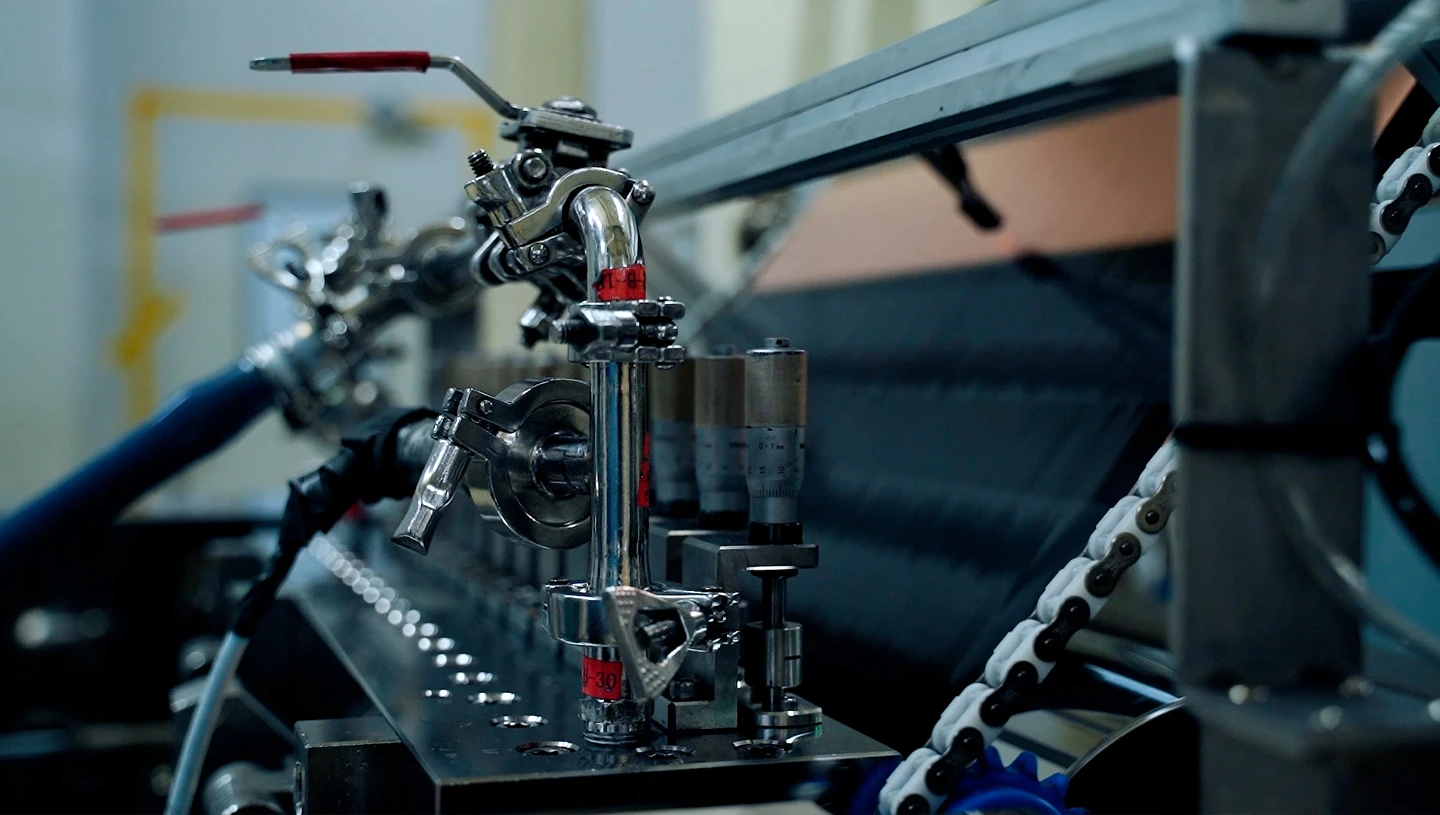
You need to monitor the “wet film” thickness in real-time. If your beta-ray gauge detects a deviation of 2mg/cm², the system must auto-adjust the pump speed. As a source factory, TOBGROUP integrates these feedback loops directly into the PLC.
Z-Stacking vs. Winding: The Great Debate
In a pouch cell production line, you have two main choices for cell assembly: Z-Stacking or Winding.
Winding is faster. It’s cheaper. But for pouch cells, it’s often the wrong choice. Winding creates stress at the corners of the “jelly roll,” leading to delamination and uneven current distribution. Z-stacking, however, provides the best thermal management and mechanical stability.
Comparison: Z-Stacking vs. Winding for Pouch Cells
| Feature | Z-Stacking Process | Winding Process |
| Energy Density | Higher (no dead space in corners) | Lower (curved edges create gaps) |
| Internal Stress | Minimal (flat sheets) | High (tension at bends) |
| Production Speed | Moderate (improving with multi-station) | Very High |
| Equipment Cost | Higher Initial Investment | Lower |
| Best For | EV and High-Performance Storage | Consumer Electronics |
For any Automated Pouch Cell Z-stacking Machine Supplier, the challenge is speed. We’ve pushed our stacking rates down to 0.5s per layer while maintaining 0.1mm precision. If you go faster without sophisticated tension control, you’ll get separator wrinkles. Wrinkles lead to “hot spots.” Hot spots lead to fire.
The Critical Role of the Dry Room and Electrolyte Injection
Once your electrode stack is inserted into the aluminum laminated film pouch, you enter the most sensitive phase. The pouch is still open. The chemistry is exposed.
If your dry room dew point fluctuates even slightly, the lithium hexafluorophosphate (LiPF6) in your electrolyte will react with moisture to create hydrofluoric acid (HF). This acid eats your cathode from the inside out. Your cycle life will plummet.
When you are looking for a pouch cell production line supplier, ask them about their vacuum injection pulse settings. You don’t just pour electrolyte in. You need to pull a deep vacuum, inject, and then use “pressure cycles” to force the liquid into every pore of the electrode.
Tab Welding: The Silent Killer of Yield
Ultrasonic metal welding is where many factory managers lose their minds. You are welding multiple layers of copper and aluminum tabs—sometimes 50 or 60 layers—to a single lead.
If the horn pressure is too high, you fracture the delicate foil. Too low, and the internal resistance (DCR) spikes. We use “Energy Mode” welding rather than “Time Mode.” It ensures every weld receives the exact same Joules of energy, regardless of slight variations in tab thickness.
Formation and Aging: The Final Gatekeeper
The last stage of the pouch cell production line is formation. This is the first time the cell is charged. You are building the SEI (Solid Electrolyte Interphase) layer.
Do not rush this.
If you charge too fast during formation, your SEI layer will be unstable. It will crack during the first 50 cycles. A professional pouch cell production line includes high-precision formation cabinets with ±0.05% current accuracy. We also integrate “Pressure Formation.” By applying physical pressure to the pouch during the first charge, you ensure the SEI layer is thin, dense, and uniform.
Troubleshooting the Pouch Cell Production Line
| Problem | Root Cause | Engineering Solution |
| Cell Swelling (Gassing) | Moisture contamination or poor SEI | Improve dry room dew point; optimize formation pressure |
| High Self-Discharge | Micro-shorts or metallic impurities | Increase cleanroom ISO class; use magnetic separators in mixing |
| Low Capacity | Uneven coating thickness | Upgrade to slot die coating with real-time thickness feedback |
| Tab Failure | Over-welding or vibration | Calibrate ultrasonic amplitude; switch to Energy-controlled welding |
The Turnkey Advantage: Why Source Factory Integration Matters
Buying a mixer from Company A, a coater from Company B, and a stacker from Company C is a recipe for a 2-year commissioning nightmare. When you work with a turnkey pouch cell production line provider, every machine speaks the same language (standardized PLC protocols).
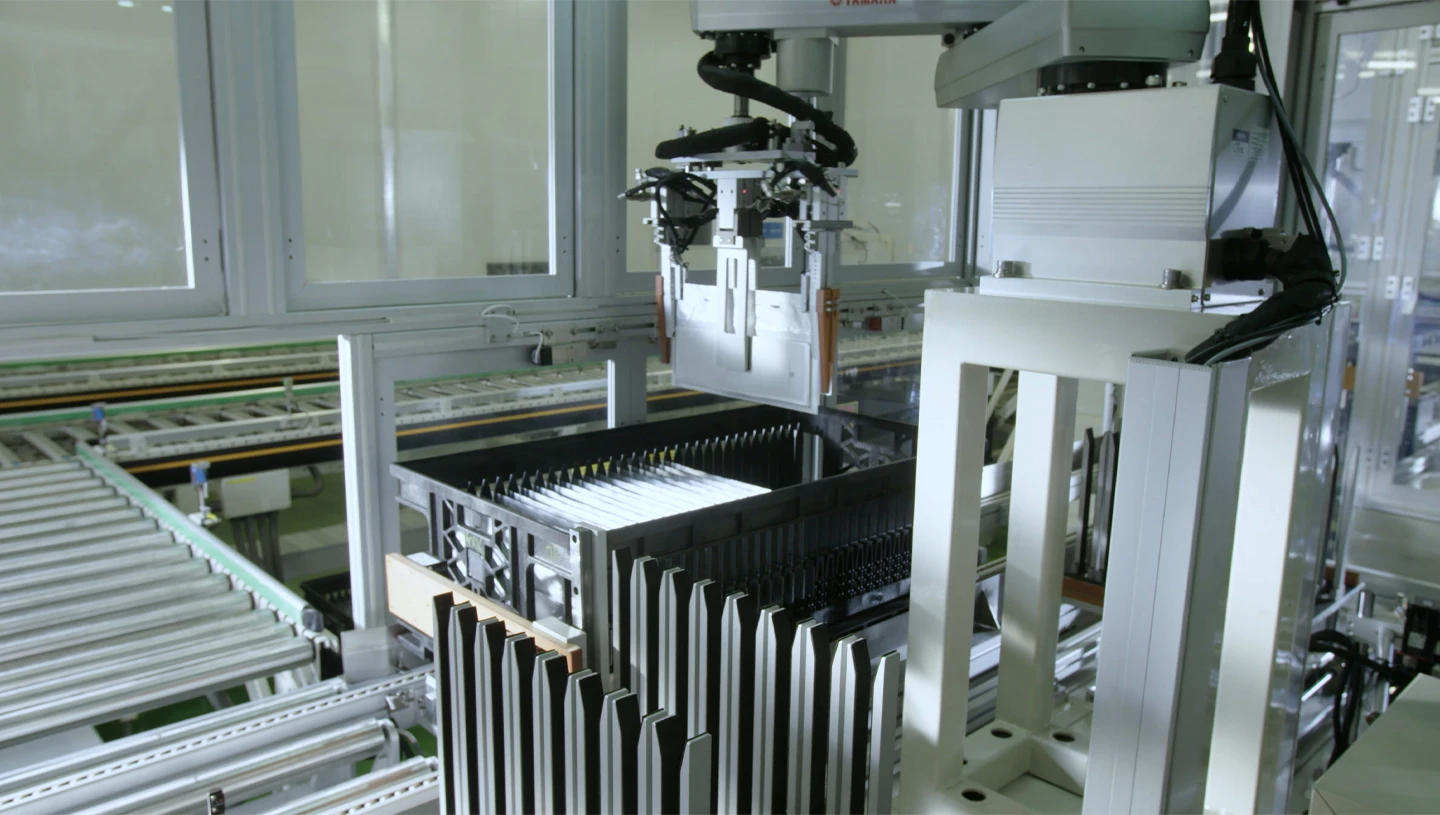
As a wholesale manufacturer, TOBGROUP doesn’t just ship boxes. We design the flow. We ensure the output of the slitting machine perfectly matches the magazine intake of the stacking machine. This “balanced line” approach is the only way to achieve a 95%+ First Pass Yield (FPY).
Scaling Up: From Lab to Mass Production
Whether you are building a pilot line for solid-state research or a GWh-scale pouch cell production line for the EV market, the physics remain the same. However, the automation levels change.
For bulk procurement of equipment, you should look for modularity. Start with semi-automated stations if your chemistry is still evolving, but ensure those stations can be linked by AGVs (Automated Guided Vehicles) or conveyors later.
Summary: Don’t Compromise on the Process
A pouch cell production line is only as strong as its weakest link. If you skimp on the NMP recovery system, your coating speed will be capped. If you buy a cheap stacker, your internal resistance will be inconsistent.
Work with a pouch cell production line manufacturer that has been in the trenches. At TOBGROUP, we’ve spent two decades refining these tolerances. We know that in the battery world, “close enough” is a shortcut to a recall.
FAQ (People Also Ask)
Q: How much space is required for a 100MWh pouch cell production line?
A: Typically, you need about 2,000 to 3,000 square meters. This includes the dry room, the mixing area (which doesn’t need to be dry), and the aging/formation warehouse. The dry room is the most expensive footprint.
Q: Can a pouch cell production line handle both NCM and LFP chemistries?
A: Yes. However, LFP requires different mixing speeds and dryer temperatures because the slurry viscosity and solvent absorption differ. Your pouch cell production line supplier must program different recipes into the PLC.
Q: What is the typical scrap rate for a new pouch cell line?
A: For a brand new setup, it can start at 20-30% during the first month. With proper turnkey engineering and calibration, this should drop to below 5% within six months.
Q: Why choose pouch cells over cylindrical cells?
A: Pouch cells offer better packaging efficiency (90-95%) compared to cylindrical cells. They also have a larger surface area for cooling, making them ideal for high-power applications, provided you have a high-quality pouch cell production line to manage the assembly complexity.


